All posts by nickrileyarchitect

Nick is a qualified Architect, with over 15 years experience. He has led projects up to the value of £50m. Nick is Board Director at Lewis and Hickey Ltd and is responsible for reporting on the Manchester office and Group Business Development. His main office base is Nottingham. Nick lives in Derby and is married with a young daughter. He enjoys playing golf (badly!) and follows Formula 1 and motorsport in general.

Samsung Galaxy or Apple iPhone?

There has been an unanswered question in my mind for sometime now; whats the best phone on the market? The Samsung Galaxy or the Apple iPhone?

My good friend and fellow bloggerTim Garratt is a long-term avid ‘Apple man’, but just recently he’s been trying out the Samsung S5 phone. Today he’s blogged about his experience so far and comparison with the trusty, but perhaps tired, Apple…click here to see his post.

Interestingly, another question in my mind recently has been the adoption of my iPad for all note taking – and losing my A5 notebook. Tim also responds to this question in his post.

It seems the notebook lives on, alongside the iPad. So too does the Apple iPhone – it just needs a better battery! It seems that rumours are circulating on the internet right now that the iPhone 6 is on it’s way, but what will it look like?

iPhone6

Buildings of Birmingham. Breaking down the Concrete.

Firstly welcome to my new-look blog site. I decided it was time for a fresh image.

Last week I was invited to speak at an FBE/ FFT Breakfast event in Birmingham. My talk was on ‘The Art of Business Development’; I was asked to do it following a blog I posted back in February (click here to see it). I enjoyed the event last week and had some great feedback after it, which I really wasn’t expecting. Whilst there, I was asked if I had blogged about Birmingham. It occurred to me that the only Birmingham based blog I have done to date was on the new Library (click here to see it). So here are my thoughts on the modern Buildings of Birmingham…

I have to confess I have always struggled to like Birmingham. I can’t really put my finger on what it is, but the City doesn’t appeal to me as much as others (London, Nottingham, Manchester etc). Birmingham was heavily bombed in the second world war, meaning a lot of new development occurred in the 50’ and 60’s; a period defined by concrete structures, with roads dominating and forming very hard divides/ edges.
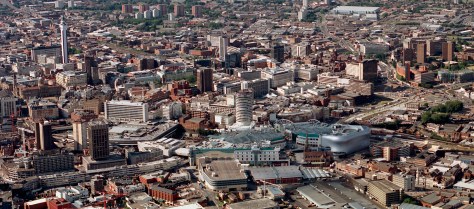
A few years ago I went to a drinks party at Marco Pierre White’s at the top of the Cube. The panoramic views of the city from the top are quite good. However, what this experience really demonstrated was how fragmented the city is; nice pockets, closely bounded by really run-down parts. This is a general theme of Birmingham in my view and perhaps this is why I don’t like it as much. The urban grain of the city doesn’t seem to flow.

On a more positive note, Birmingham does seem to have created a bit of a niche for creating bold, contemporary buildings, these help define its character. Most of these buildings challenge the norm of modern architecture. The story starts in the new millennium and here’s six contemporary buildings which are starting to change Birmingham’s concrete image.

In 2000, The Mailbox was opened; the site was formerly occupied by the Royal Mail Birmingham sorting office. The open-air luxury brand shopping mall has hotels and offices above, as well as the BBC Midlands HQ; a genuine mixed-use development. However whenever I’ve been over the years, the red-fronted mall lacks life and feels more like a ‘route through’, than a ‘destination’.

Birmingham Mailbox

2003 saw the Bullring redevelopment, which included the new £60m Selfridges building; a morphic like, largely windowless building, decorated with domed silver discs. It was certainly bold in its time, and seems to have aged reasonably well. Also the Grade II listed Rotunda building was reinvented by Urban Splash, converting it from offices to Residential.

Selfridges Bullring

In the same year No. 10 Holloway Circus became the City’s latest (and tallest) building. Designed and built by the same teams as Manchester’s Beetham tower, it takes on a similar aesthetic of predominately glass, with vertical ‘tiger stripes’. However this building is very one-sided and seems to get a little lost in the skyline; it certainly doesn’t provide a focal point like Manchester’s version.

No 10 Holloway Circus

The Cube was built more recently, opening in 2010. The 25-storey building is a substantial block, albeit a portion of it is hollow in the centre. The metallic ‘Tetris’ looking cladding doesn’t appeal to me, but again it’s certainly a noticeable building.
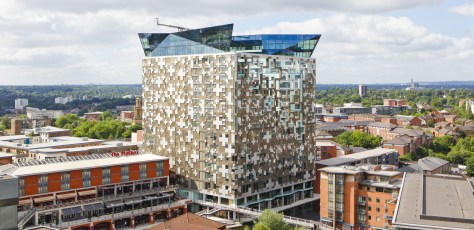
The Cube Birmingham

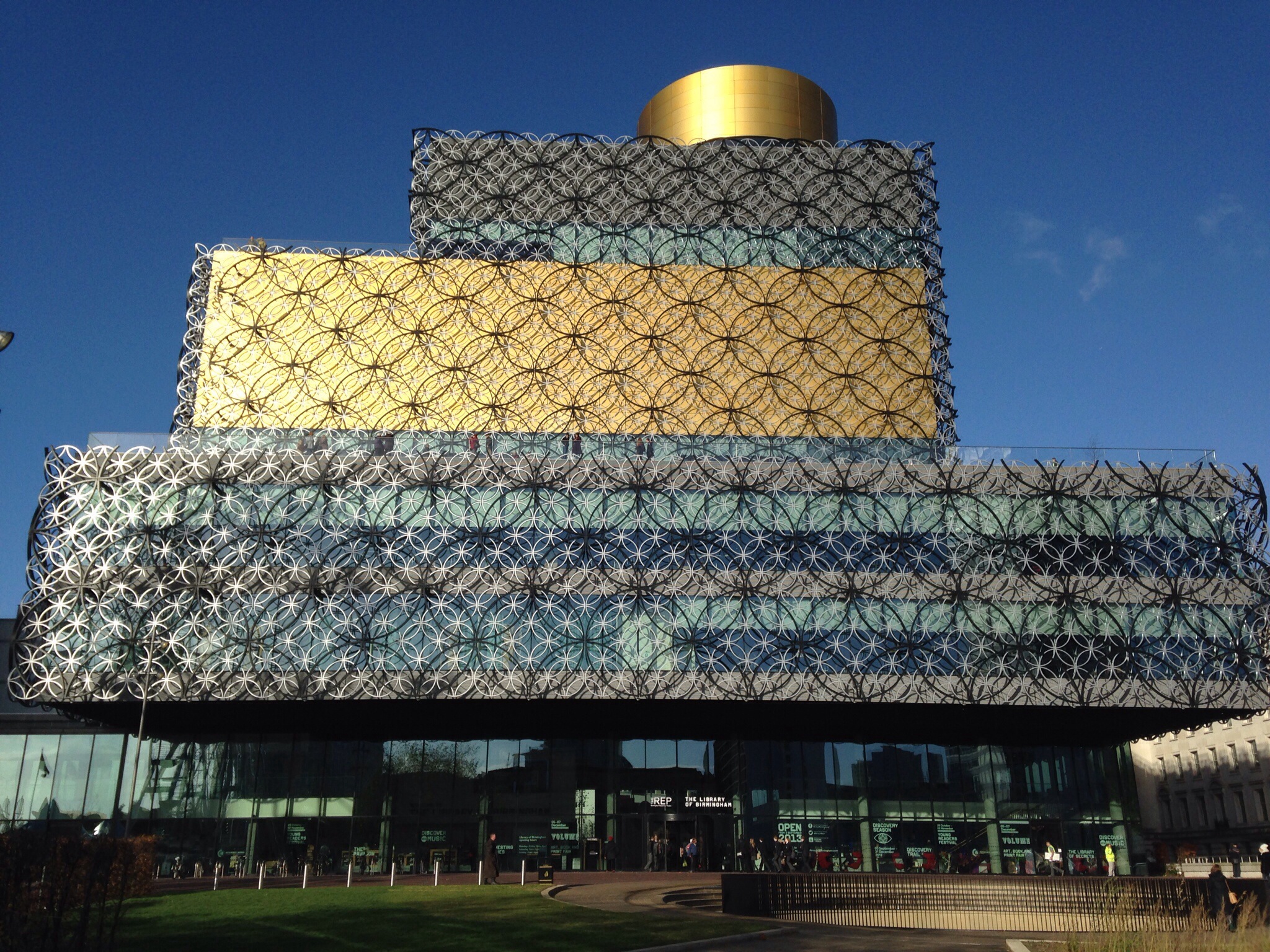
The Library building, by contrast to the others in my view, is a huge success. A truly great example of contemporary architecture; both in its look and use. I think we will see more of these multi-layer buildings emerge in the future.

20131124-205812.jpg

The latest building(s) to emerge in the City is the New Street Station redevelopment (or Gateway Plus), incorporating the old Pallasades Shopping centre, with a new-build John Lewis department store as well. It seems to take cues from the other Birmingham buildings I’ve mentioned here, with curves, glass and stainless steel cladding forming the look. It’s still in construction, but I’m not convinced yet from what I’ve seen to date.

Birmingham New Street Station

Manchester remains my ‘second City’ of the UK and a real favourite in terms of architecture and a city. It has also reinvented itself incredibly well from its heavy industrial revolution period.

I do applaud Birmingham for recognising the importance of architecture in defining the City. Perhaps the post-war legacy issues of Birmingham are so substantial that it will take many years to re-connect the urban fabric into a cohesive experience. Continuing to break down the depressing 50’s and 60’s concrete will redefine Birmingham’s image.

High quality individual buildings are really important for Cities, but so too are the bits between them.


 

WCEC Student Living launch

I have spent a number of years now designing and delivering contemporary purpose built student accommodation developments for a wide range of clients. In all I’ve overseen the delivery of around 14,000 beds to date.

Today I’m heading down to London to speak on a panel at a national
Student Housing conference hosted by LD events. This event pulls over 300 delegates to discuss the sectors activity and predictions for the coming year. I’ll be speaking about design evolution and also the emergence of branded environments in Student Living.

This week is quite a big one for me actually. WCEC have launched our Student Living sector and team following a number of new project enquiries since I joined the business back in March. We have a very strong offer through our sector specific experienced team of around 15 design and technical staff, amongst our 120 strong overall team. The team have been doing some work recently on developing some new concepts for Student Living as part of this launch. These designs focus on specific details to promote efficiency of optimised use of space.

20140515-073917.jpg

Also this week, I have accepted an initiation to sit on a development sub committee for the British Property Federation Student Accommodation group. This is led by Richard Simpson of Unite Students and Charles Marshall of Liberty Living. I’m delighted to be contributing to this important and influential work. The BPF team engage with central government on all Student Living and Higher Education related policy matters.

According to Universities UK’s latest UK-wide study on the impact of the higher education sector on the UK economy, universities now generate £73 billion in output – up (24%) from £59 billion when the last study was published in 2009. This puts higher education ahead of many other UK sectors, including basic pharmaceuticals, air transport, advertising and market research, legal services and computer manufacturing.

Student Living, alongside Higher Education, is now being taken very seriously. It’s matured as an asset class in its own right and will continue to form an important sector within property.

You can read a bit more about this news on our website by clicking here.

If you wish to learn more about our business, our student living design ideas or our new team, please don’t hesitate to contact me. My email address is nick.riley@wcec.co.uk

Spooks Movie | The Greater Good

For a number of years I’ve followed the BBC Television series Spooks. It ran from 2002 until 2011 and gave a fictional impression of the leading MI5 department within the British Secret Services. The lead character was Harry Pearce played by Peter Firth.

It was a high budget and high pressure production which always ended with a nail biting cliffhanger. Some of the stories were very topical in relation to current affairs with modern political, cultural and religious conflicts forming strong story lines. This gave it a distinct feel of authenticity. Arguably it was a much more realistic version of James Bond!

I really enjoyed watching the 10 series which were aired. It was a shame the BBC axed it. I always wondered whether some of the content was in fact a bit too close to reality. As a regular London visitor, you do wonder about some of the underworld intelligence activity which is no doubt happening around you at times.

I crossed Waterloo bridge yesterday with a couple of colleagues and we realised we were walking through a a fairly substantial film set up. When we saw the clapperboard it said “Spooks”! It’s back. But this time it’s a film.

spooksStaring Peter Firth, Kit Harrington, Elyes Gabel and Jennifer Ehle (we saw Peter and Jennifer acting on the bridge), the film is a story about a terrorist escape, followed by the disappearance of ‘Harry’. The race is on to determine what’s happened as an impending attack on London looms.

Film production started in March 2014 and is apparently expected to take less than three months. The film uses a wide range of locations, including a recent busy traffic scene under a flyover in Coventry (which was meant to be the M4).

You can read a bit more about the forthcoming film by clicking here.

I’m looking forward to seeing Spooks make a return and I’m sure the big screen version will be excellent!

Where’s the Respect?

Last night I watched the Panorama programme ‘Behind Closed Doors’, which exposed what ‘could’ be a fairly common issue with poor quality care being provided for older people living in Care homes. Some scenes were disturbing. There was a fundamental disrespect from some staff towards these dependant people who just wanted, it seemed, some time, respect and compassion in their support needs.

It’s perhaps easy to generalise here and I do accept that there is some excellent care provision out there for old people. But how can we guarantee it? This subject is particularly relevant to me as we have a family member who really needs to be in a care home now, but these decisions are very difficult to make and can affect a lot of people. Making an objective decision based on someone’s needs, but with such a strong emotional aspect to it all, does confuse the matter.

If the Panorama programme is accurate, then some serious intervention is required by company owners and regulators to improve this. Better accountability and governance is necessary. Perhaps cameras in homes is the only way, but this doesn’t provide privacy for people.

It’s worth remembering that Care homes are generally profitable companies and are phenomenally expensive to live in; £500-700 a week is fairly common and some people are self-funding this. The ‘sell’ is a lifestyle which for some may be just right, but others, hopefully a minority, are buying a false dream.

Sadly, I think the problem here is much wider spread. Lacking respect for other people in society is a cultural issue. My wife and I were in a hospital the other day; it was a very ‘multi-cultural’ experience sitting in the waiting area. I actually felt uncomfortable sitting near some people who had such a blatant disrespect for others in their actions, and their children’s too – there was a real arrogance. In this instance, it seemed that technology was partly to blame as two parents were glued to their phones, while their young child roamed around swearing with a games device in his hand.

I think these abuse issues aren’t just happening in care homes. Anyone who is dependant on support may be exposed to this unbelievable behaviour; children’s nurseries and hospitals being just two other obvious examples.

Improving these issues is complex, but society in general, it seems to me, lacks respect for others and this is having a real impact in some specific situations and adversely affecting people lives.

How sad. Where’s the respect? What a sad way for these people to spend the final chapter of their life.

The London Underground

In London today we’re in the middle of another 48 hour strike by employees, which always causes disruption. London relies so heavily on the Tube for daily life. This and seeing a new London Tube map on-line last week, has prompted me to ponder the Tube’s story and diversity a little more…

The TubeThe London Underground, better known as the Tube, has 11 lines covering 402km and 270 stations. Opened in 1863, it is the world’s oldest sub-surface Metro network, and one of the largest. The Tube handles around 3.5 million passenger journeys per day, rising to more than four million during busy periods. There are many interesting facts about the Tube, some of these are;

  • The shortest distance between two adjacent stations on the underground network is only 260 metres. The tube journey between Leicester Square and Covent Garden on the Piccadilly Line takes only about 20 seconds, but can cost £4.30. Yet it still remains the most popular journey with tourists!
  • Many tube stations were used as air-raid shelters during the Second World War, but the Central Line was even converted into a fighter aircraft factory that stretched for over two miles, with its own railway system. Its existence remained an official secret until the 1980s.
  • Only 45 per cent of the Underground is actually in tunnels!
  • Over 47 million litres water are pumped from the Tube each day, enough to fill a standard leisure centre swimming pool (25 metres x 10 metres) every quarter of an hour.
  • Tube trains travelled 72.4 million train kilometres (45 million miles) last year.
  • According to a 2002 study air quality on the Underground was 73 times worse than at street level, with 20 minutes on the Northern Line having “the same effect as smoking a cigarette”.
  • On August 3 2012, during the Olympic Games, the London Underground had its most hectic day ever, carrying 4.4 million passengers.

One of the first Tube map’s produced in 1908 was a pretty basic diagram, with the central line being blue. This was based on fairly accurate plotting of the tube routes in relation to the street map above.

The ORIGINAL London Underground mapIn 1931, Harry Beck produced the well known Tube map diagram while working as an engineering draughtsman at the London Underground Signals Office. He was reportedly paid 10 guineas (£10.50) for his efforts. This map remains in use today, with some minor alternations.

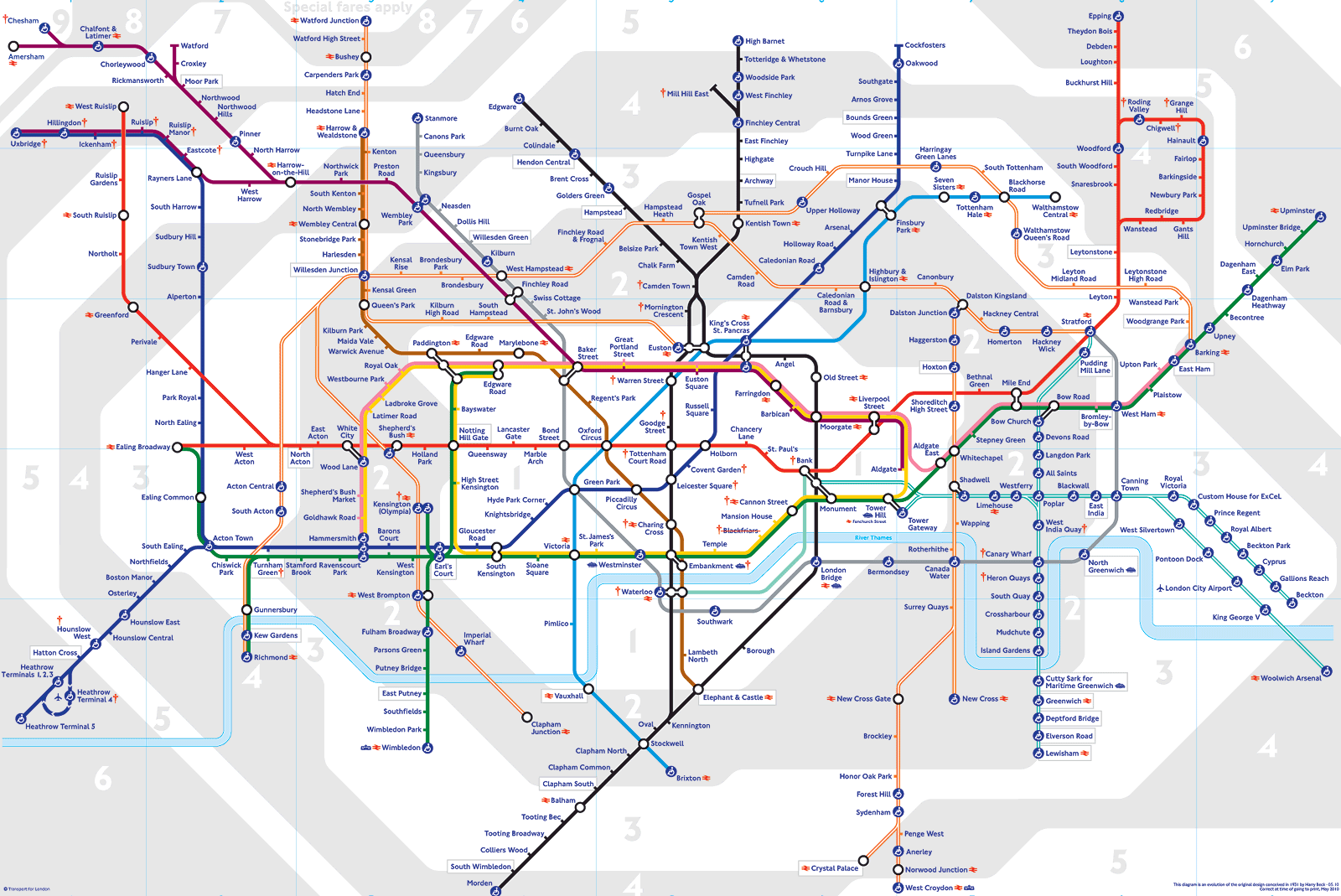
The London Underground mapI’ve been using the Tube for many years. I can get my way round London fairly easily now. The hardcore Londoners know which stations have the longest tunnels you have to walk around to get from the pavement to the train. As part of Beck’s design back in the 30’s he disregarded the physical proximity of stations/ places above ground. This is logical in a way, but it can cause confusion and unnecessary travel.

You can see a more geographically accurate up to date map on the London Underground by clicking here. You can understand where Beck’s idea came from in creating some uniformity and consistency of proportions.

Recently a young French Architect, Jug Cerović, has been designing new tube maps for various global cities. His latest one is London and I quite like it. Graphically it’s not dissimilar to Beck’s version, but it introduces more curves and is more accurate in terms of geography. It’s a bit more practical as it identifies which lines you can get on/ off at each station, and it also includes the overground lines (in a diagrammatic circle) around Central London.

The NEW London Underground mapCerović has designed underground maps for most major cities around the world now. His concept is to form a global standardisation, which again makes a lot of sense for tourism etc. You can see more of his work by clicking here.

It’s good to see an architect demonstrating the value of good design, in a broader context of our built environment.

Art and Architecture at Nott: Just a City

Last week I blogged about my visit to see the ArcelorMittal Orbit tower at the Olympic park in London, click here to see it. The point I made in this was that Art and Architecture cannot become one entity in the form of a building.

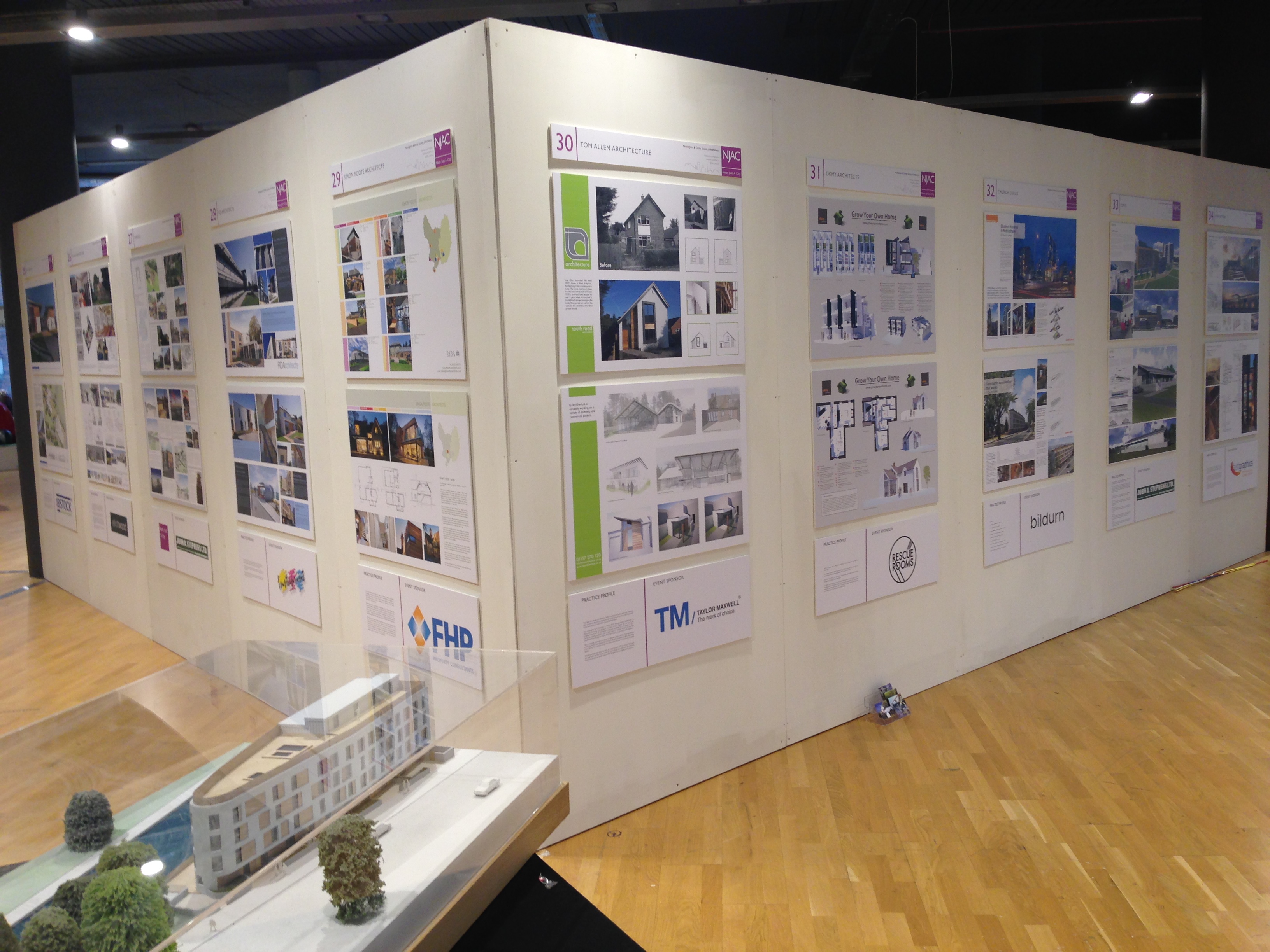
I maintain that view when it comes to physical buildings, but my perspective was broadened on this last night when I visited the ‘Nott: Just a City‘ exhibition in The Pod, Nottingham. The Nottingham and Derby Society of Architects (NDSA) have run this event for a few years now and they invite local practices and students alike to showcase their work. This creates a great fusion of design thinking and practice achievements.

photo 1(1)Last night Elliott Wood hosted an excellent ‘British’ themed drinks event at the exhibition, with all drinks and food being from local/ British sources. It was great to catch up with some friends in the Nottingham property community, especially as I don’t ‘live’ in the city now in terms of my work base.

In addition to some design inspiration and stimulating conversations (especially with my good friend John McCay on ‘infographics’) I took two key things away with me last night;

– Art and Architecture definitely DOES exist – in the illustrated form. There were some excellent examples of creative design and different presentation techniques, including some physical models which I always like to see.

– Nottingham really IS a ‘Talented’ city (which was the message the city took to MIPIM last month). The engagement between industries and Nottingham’s two superb Universities is so important – and last night was a great showcase of this.

photo 1-2If you get a chance, call into the NDSA Nott: Just a City exhibition before the 19th April. It’s worth a visit, especially to see Elliott Woods parabolic structure…

Thanks to Gary Elliott, Stephen King and the team at Elliott Wood. A really good and different event.

London’s Parks; Queen Elizabeth Olympic Park

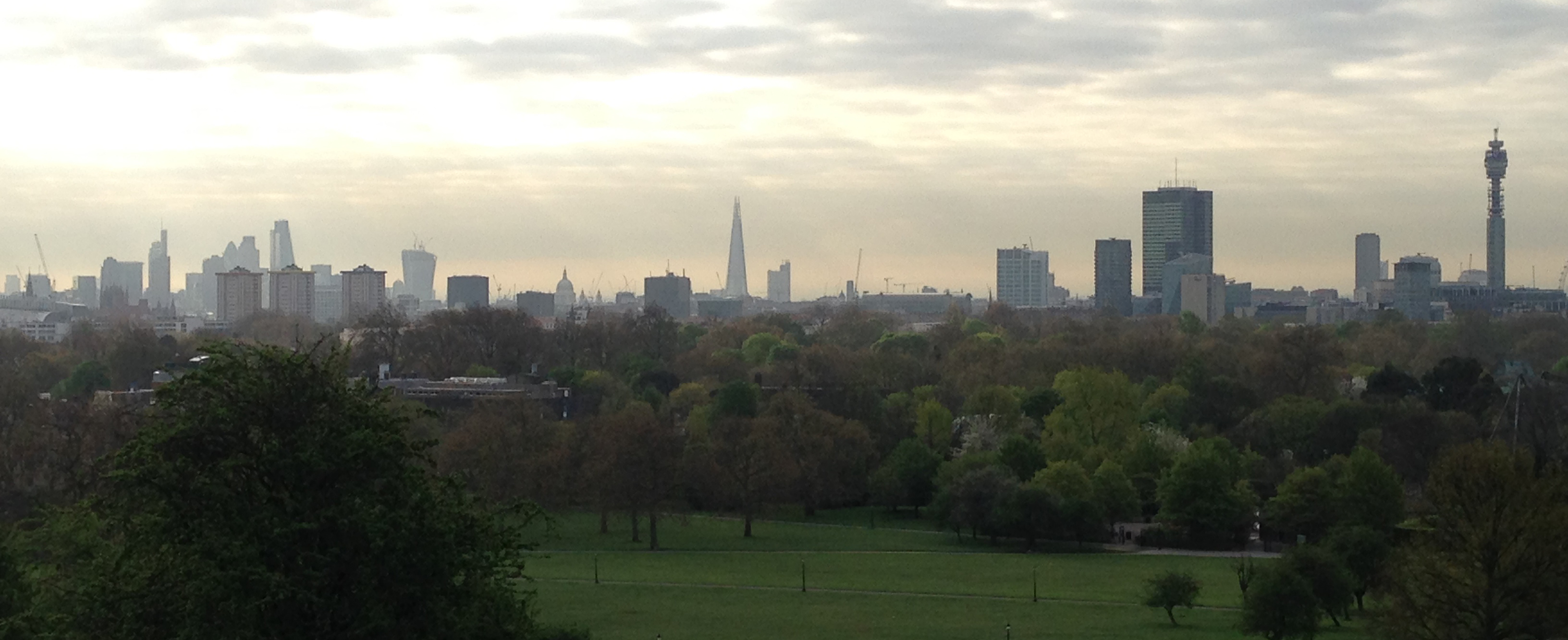
London has some amazing parks. This morning I took a run along the Regents canal, into Regents park and up to the top of Primrose Hill. The view from there over the city is quite something.

Primrose HillYesterday I was over in Stratford, East London and took a brief walk into the newly opened Queen Elizabeth Olympic Park. This is an impressive place. The Aquatics centre stands out; it looks stunning with its free-flowing form – and the removal of the temporary ‘door stop’ shaped seating stands used for the Olympics. The stadium is being reconfigured at present to form it’s long-term 60,000 seater set up for West Ham.

London Aquatics CentreStanding next to the stadium is the ArcelorMittal Orbit tower. An oddity of a structure in my view. I’ve never been a fan of this ‘thing’ which was my friend Boris Johnson’s mark on the games. It was conceived by Anish Kapoor as Art, but required the functionality of a building. Kapoor has created some outstanding Art creations, but even he struggled with this project in relation to the regulatory constraints imposed. However this structure proves to me that Art and Architecture cannot become one. The two can sit together and enhance each other, but putting them together into one simply doesn’t work, especially here!

ArcelorMittal OrbitI was asked if I’d like to go up it for free – normally it costs £15, but someone had a spare ticket. I took the lift to the top and enjoyed the views of London, The Westfield shopping centre, the impressive new park below me – and an awful lot of nothingness around it. This place will evolve in time I’m sure, but for now there’s a way to go in creating a ‘place’ where people live and work; a community.

Queen Elizabeth Olympic ParkI quite like the new QEO Park. Having experienced the ‘Orbit’ I am still very much a critic on that. They’ve certainly spent some money on the new park! It’s right for London to grow/ evolve the story of it’s parks; it’s a defining and characterful part of London.

Bluebell Wood Children’s Hospice

Since joining WCEC just over a month ago, one (of the many) thing’s I’ve been really impressed with is the charity support the business promotes. A large proportion of our 100+ strong staff team enjoy exercise/ sporting pursuits, this includes; football, running, golf and cycling – and there are numerous groups/ teams who do this together.

Team WCEC & FriendsLast year the company raised over £4500 for our charity, Bluebell Wood Children’s hospice. A lot of this was achieved by linking our sporting interests to charity fund raising. We have a number of annual events such as the recent Dronfield 10k run which a large number of staff took part in.

On the 12th April one of our Partners James Kemp and Associate Andy Dabbs are following their beloved football team, Sheffield United, down to Wembley for the FA Cup semi-final match with Hull City. But they are riding the 185 mile journey on their bikes! You can sponsor their efforts by clicking here

DSC03228 I’d like you to understand our charity support a little more…

The Bluebell Wood Children’s Hospice charity was established 1998 to offer care and support to children with a shortened life expectancy, both in peoples own homes and at their hospice in North Anston which was purpose built in 2008. I’m sure this is a difficult subject for some people to consider, especially for those with children like myself. But this charity is doing some amazing work and I’m sure they can always benefit and provide more if they can continue raising much needed funds through generous donations.

They provide a range of care and support services to young people within specialist facilities which can cater for a wide range of needs, but importantly; they do this is an environment that feels safe, homely and unlike a hospital. Their objective is to give these young people some love and laughter; ‘enjoyment’ in a life which is otherwise challenging for some reason, or at such a critical time near the end of their short lives. There are perhaps few happy endings here, but the work of this charity is so, so important in providing the best possible care for both young people and their families. Perhaps most importantly Bluebell Wood can provide the best possible and most comfortable ending, which can include some lasting and happy memories for their families. That’s pretty special.

bluebell_wood_hospice_logoI already donate to a select number of charities such as Asthma Research (following my Mum’s death) and the RNLI for their great work in saving lives in our domestic sea waters, but Bluebell Wood have a new supporter in me, as well as through our company fundraising. I’ve recently found out that they are running a skydive later this year…watch this space!

Amazing work and an incredibly worthy cause. Please support them by giving a little – or a lot! Follow them on Twitter @BluebellWoodCH or click here for their website www.bluebellwood.org/

Mind the Gap: London vs The Rest

In the days before the recession, now a distant memory, London seemed to be an integrated part of England/ UK in property terms. It’s always performed extremely well, but comparisons were still made with ‘the regions’, i.e. other UK cities. More recently London has continued to grow at a phenomenal pace – throughout the recession, whereas the regions have all but stopped in relation to investment/ property development. Thankfully the regional cities are waking up again now and the future is certainly looking brighter for the UK as a whole. However, the spectrum between London vs The Rest is probably the widest it’s ever been.

At MIPIM recently and also in the press, particularly in relation to the strong recovery we are seeing in the residential sector, comparisons are still made between London and the regions. This continual comparison is starting to frustrate me as I think the relevance of this has diminished. I work in both the regional cities and London on a weekly basis so I’d like to think I can see this from both perspectives here. Londoners are only really focused on London – so too are international investors. The regional cities seem to take the view that London is over heating and that the regions should get ‘their share’ of investment/ property development activity. Why?

Evan Davis recently presented an insightful two-part programme on the BBC which considered this very issue. This was a good review and was very much focused on investment/ real estate comparisons. Looking back at history he illustrated that at the peak of the Industrial Revolution, the middle of England; cities like Liverpool, Manchester, Leeds, Sheffield, Nottingham and Derby were significantly higher than the rest of the UK, including London, in economic terms.

London connectionsToday, London performs substantially better than the rest of the UK. To give a sense of this, Residential values in Central London are peaking at levels of £3000ft2 – or in extreme cases up to £6000ft2. Whereas the regional average is around £350ft2. The average house price is the UK is £180k and it’s size is typically between 800-1000ft2. Therefore a house of this size in London would probably fetch around £2.7m. Values have risen in the last year at a UK average of 9.5%, whereas as London has increased by 18%.

London is unique in the context of the UK, now more than ever. It’s a global city; THE global city in fact. It attracts substantial international investment, but why is it so unique? There are many reasons, here’s a few;

– It sits geographically and timezone wise ‘in the middle’ of the global money markets.
– It is politically stable/ safe.
– It has the most universally used language.
– It’s offers a wide range of lifestyle/ cultural diversity.
– It has a strong sporting offer.
– It’s has a wealth of English heritage/ history.
– It’s incredibly well connected on both local and global levels.
– It has a strong and diverse concentration of people/ demand.
– It attracts the best talent in most sectors, both domestically and globally.
– It has a substantial number of educational institutions.

London is an incredible success story and I have no doubt it will continue to perform well for the foreseeable future.

But, it my view the UK regional cities should not try and compete with London. They can’t. There is definitely a lot to learn and observe in terms of what London has done well, but regional cities need to focus on defining themselves on a more domestic level. Connectivity into/ out of London is clearly really important for the regions.

MIPIM saw most regional cities flying banners with the usual message; ‘We’re open for business’, but is that enough? Accepting that London is now a firmly established global city, perhaps there is a strong argument to suggest that a National/ Domestic capital city should be identified. Would this help promote the wider UK? In my view Manchester is the only contender and is already the UK’s second city. If Manchester were to be named the national capital, would this give middle England some stature?

British Suburban Utopia?Most cities have pretty poor quality office provision today, with a lot of 1960’s stock – most of which is being pushed down the Permitted Development route to convert them to Residential. Will these be sustainable? (in commercial and environmental terms – and in the context of the city fabric), or are we just creating a bigger problem for the future? These buildings should probably be demolished and replaced. I accept that this is challenging financially, but it’s probably one of the biggest nuts to crack. In terms of Residential dwellings, getting people back into the cities IS important. And not just that, providing a strong mix of dwellings to suit all ages is important – along with facilities like well performing schools (this being a big influencer in house purchases/ values). The UK, again linking back to the Industrial Revolution, has a mentality/ habit of the wealth pushing out to the green areas. This seems less of an issue in mainland Europe. City living is far more common out there. Can the UK accept that City Living works? It should certainly be affordable which references another issue with younger people trying to enter the market.

This is a complex and never ending subject. My point today is two-fold;

– London is distinctly separate from UK regional cities and people need to accept that.
– The regional cities need to find a way to make their cities work and provide the ingredients that London boasts; City living for all and the very best commercial offer. The latter should not, in my view, be concentrated on Local Enterprise Zones if these are outside of the city centres. This will make the social/ economic problems worse by making the commercial centres ‘suburban’.