The high tech house of Sir Stirling Moss.

Today, technology integrated into houses is fairly common place, especially in luxury homes. Properties can now be run by computers controlling heating, cooling, security, lighting, solar shading, audio and visual devices – its all out there, and you can spend some serious money on it too. Furthermore they can all be remotely run via the internet or on an App on your phone, so you can see whats happening from anywhere in the world.

Back in the 1960’s clearly things were very different. Except that is for a modest and understated home nestled in the heart of Mayfair, belonging to the racing legend Sir Stirling Moss.

Stirling Moss was the first British driver to win a Formula One British Grand Prix, in a British built car back in 1957, at the peak of his racing career. The car was a Vanwall and the location wasn’t Silverstone, as you might expect. For that year the race was hosted at Aintree in Liverpool, alongside the Horse racing circuit. Sadly Moss suffered a massive crash in 1962 which resulted in his early retirement from F1, but in those days he was seriously lucky to survive. In the 1950’s some 15 F1 drivers were killed, followed by 12 more in the 60’s. The racing was as much about surviving then as it was about winning! Thankfully the sport is far safer these days, with the last death in F1 being the great Ayrton Senna in 1994.

Back in 1961 Moss acquired a world war bomb damaged plot of land in Mayfair for £5000. He had the option to purchase an adjoining hotel as well, but didn’t. He built a 2500 sq.ft. house over 5-storeys for £25,000. He had a heavy influence in the design of his house and integrated as much innovation as he could. Today Moss is 83 and still resides at the same house. Its estimated to be worth at least £6-8m.

IMG_3582The house includes; an automated bath, an electro-hydraulic dining table that can move from the kitchen on one floor directly down into the dining room on the floor below, and a letter tray which transports post from his office directly to his wife’s. The large windows on the small street are mirrored for privacy. But my favorite innovation, albeit installed more recently, is the carbon fibre lift, which was built for him by the Williams F1 team. In his office he sits on a classic Charles Eames lounge chair. Here is a man who has had a lifelong obsession with innovation, technology and attention to detail, before the rest of the world really knew about it.

I recently visited the street he lives on to have a look at his house. Although its tucked into a corner at the end of a narrow street, its easy to spot thanks to two metal car pictures on the wall. This somewhat lesser-known and quiet area of Mayfair, in between Green Park and Park Lane, seems to enjoy a thriving micro-community of independent shops and bars, much like other parts of central London I know. These little gems are great places to experience, especially in the rush of central London generally. Mayfair is named after the annual two-week fair in May which took place there. Other notable residents of Mayfair include Architect Robert Adam, son of William Adam, and telephone inventor Alexander Graham Bell, amongst many more.

One of Moss’ favorite cars is the classic Mercedes 300SL Gullwing of the of 1950’s. Around this time my wife’s Grandfather had a prestige Mayfair car dealership called Brooklands Motor’s of Bond Street and they sold that particular model of Mercedes. I wonder if they ever met? In 2009 Mercedes launched a limited edition model called the SLR Stirling Moss, only 75 were made.

brooklandsAccording to Moss’ website, he is currently at design stage for a refurbishment of his Mayfair home, it will be interesting to see how this looks. At 83, he actively maintains a property company, renting houses/ flats in London and has various other interests, including being a narrator for the children’s TV programme Rory the Racing car, alongside Peter Kay.

So there you have another fusion of architecture and Formula one, along with the magic of Mayfair and a true British racing legend with an early eye for innovation, technology and attention to detail. Huge respect to you Sir Stirling, for both your racing achievements and your lifelong pursuit of innovation.

SLR Stirling MossAs a footnote; I’d like to say thank you to the various people who have commented on my blog recently. I’ve had some great feedback and its good to know people are enjoying reading my perspective.

New cars for 2013…

Anyone who knows me well will be aware that I am somewhat of a ‘motorhead’. I love anything that’s got an engine and goes fast, particularly cars. I sometimes consider what I might purchase should I find myself with a spare half a million to populate my house-sized garage…a dream some way from realisation I might add. However here’s a handful of cars due out this year which are worth a look…for dreaming if nothing else;

The McLaren P1. Built by the Formula One team, this car is the successor to the original and now rare 3-seater McLaren F1 road car, built from 1992-98. The car is likely to run on a 3.8L V8 engine, with F1 KERS (Kinetic Energy Recovery System) providing further boost. This will give it nearly 1000bhp and a top speed of around 240mph! Price tag; likely to be around £700k! This model will sit above the MP4-12C road car already in production. I’ve blogged about McLaren and their amazing factory previously (click here to see it). Seemingly everything McLaren do is focused on design, speed and infinite attention to detail.mclaren-p1-1

Infiniti FX ‘Vettel’ edition. Staying with the Formula one theme, Infiniti, who are a subsidiary of Nissan and also sponsor the Red Bull F1 team, have produced a special 5L V8 version of their SUV luxury model. Its been launched to mark the success of Sebastian Vettel’s Championship wins. Infiniti remain relatively unheard of in the UK and I suspect there are other more popular luxury car makers here for them to become mainstream, like Range Rover.

BMW 4-Series. The German manufacturer appears to have got confused with its numbering of the all-new 3-Series. They have decided to call the 4-door saloon and touring version of the model the (traditional) ‘3-series’, while the 3-door coupe version will now be named the ‘4-Series’. This would seem to be in response to Audi’s ever increasing line-up of models. Regardless, both the 3 and 4 Series will no doubt continue to be top sellers and I think this model particularly looks superb.BMW-4-Series-Coupe-Concept-1Jaguar F-Type. Again a successor to another amazing car perhaps, the original 1960’s E-Type. Could this car become another iconic British motor legend? It certainly looks good, but I’m not sure its breaking the mould. Arguably the McLaren is far more dynamic in terms of new ideas and technology being employed. However, for a fairly reasonable £60k, I suspect this may well be a popular choice.JAGUARF-Type-4666_6Bentley Flying Spur. Keeping things British (sort of), Bentley (owned by the German VW Group) appear to be busy developing new cars, thanks to demand from the far east mainly. They launched the new super luxury Mulsanne in 2010 and a second generation new Continental GT in 2011. The Flying Spur is a 4-door saloon version of the GT and is due out later this year. Bentley are also developing a new SUV/ 4×4 codenamed the ‘EXP 9 F’, but the initial images of the car to date have been rather questionable!…hopefully the actual production model will look better. My brother works at Bentley in Crewe – this is the original Rolls Royce factory where both cars and the Merlin Plane engine were manufactured during the war. A visit to the new facility is a real treat, especially to see the craftsmanship employed – somewhat of a rarity these days sadly.EXP_9_F_2_21Other cars in development are; A new Ferrari Enzo, a new Aston Martin Vanquish (which will look like all the other Astons!), a new Lotus Esprit and a new Mercedes S-Class (one of the most leading edge cars in terms of new technologies which later become mainstream).

The list of new cars could clearly go on, but these are a few of the cars which have attracted my attention most and I’ll look forward to seeing these on the roads. I think one thing that appeals to me about the car industry is that it never stands still. Cars; in the way they look, feel and drive, continue to evolve and improve. This includes safety, technology, speed and now sustainability of course

Of the 33 million vehicles on our roads in the UK, 27 million are cars. Road transport accounts for 22% of total UK emissions of carbon dioxide (CO2) – the major contributor to climate change. The EU and UK Government pressure on manufacturers to improve efficiency is significant, but cars still need to go fast and look good.

In terms of cool garages, Chris Evans has a pretty impressive one. It houses his all-white vintage Ferrari collection. However one car in his collection has its own lounge! Well if you’d spent £12m on a car (the most expensive in Britain) you’d want to give it a special home. Its a rare Ferrari 250 GT (only 36 were ever made).

Untitled-1When I was about 14 years old I decided I wanted to be a car designer or an Architect. I suspect I made the right choice, for me, in becoming an Architect, but it must be fascinating to be part of developing a new vehicle for production and distribution around the world.

So, if you see me in any of these cars soon, there’s a good chance I’ve won the lottery! If I did win the lottery would I still work as an Architect? There is no doubt in my mind, I definitely would carry on working. But I’d probably enjoy a collection of cars too.

Reflecting on 2012

Twenty twelve has been somewhat of a roller coaster year, with both challenging and rewarding times for me in business. Its been my first year as a Board Director and towards the end of January will be my first year of blogging.

I’ve been really pleased with the positive feedback my blog has received to date and I look forward to taking the blog further this year. The blog has now had over 10,000 views from  120 different countries! This has far exceeded any expectations I had. The top five highest hitting countries were; the UK, India, United States, Australia and the United Arab Emirates.

My top five blogs out of my 31 total posts were;

My Formula One piece was only the second blog I did, and I plan to talk more about F1 this year. If you google “formula one and architecture” my blog is the first result to come up out of 10,500,000 results. Also, my trip to Dubai and India in July gave me lots of material to talk about and helped me to digest some of my experiences on this short and busy trip. The 4th July was my busiest day seeing 159 views.

So, what will 2013 bring as we look ahead at the year? I have lots to do in terms of our business. I’m now responsible for leading both our Manchester and Nottingham offices and maintaining a clear focus on some defined objectives will be essential as I balance my time carefully. We will be launching a new company web site in the very near future. This is something I’ve led and have been keen to complete. I hope it gives us a positive fresh look and clearly illustrates our diversity and experience in many different areas of architecture.

The blog will remain an ongoing tool for me to download my perspective on the world I experience. I plan to talk more about different buildings I’ve visited, architecture generally, our work at Lewis and Hickey, social media and of course; Formula One (linked to Architecture).

Social Media is still a real interest for me, especially in the business context. I am fascinated with the way in which we can now communicate with modern hand-held technology. Also I continue to be amazed by how quickly information can travel around the world. Earlier this year I was on a train back from London (following a pretty bad day) and a family friend of ours shared a video on YouTube called Eton Style. James was one of the creators of Eton Style and features in the short film. You may have guessed by now that its a take on PSY’s Gangnam Style. From watching it on the train late that evening it made me laugh out loud. I then showed my wife the video the next morning…and it had gone Viral! It has now reached nearly three million views! It reached newspaper headlines, got celebrities tweeting and also got a mention in The Weeks people of the year last week. The power of social media is immense. I wonder where it will go next – it is sure to continue evolving and progressing.

You can see this film by clicking on the image below – its worth a watch!…

557081_4716018695425_1379006912_nSo, all that remains from me, in my first blog of 2013, is to wish you a very Happy New Year and I genuinely hope that this year is a positive one for you and your business’

UK ‘indigestion’ and global growth in Student Living investment

Last week I blogged about ‘will the student living development boom continue?‘ This blog post was just ahead of the annual Property Week Student Accommodation conference in London.

It was an informative and useful day – better than previous ones I think. It was well attended with around 425-450 industry professionals there ranging from; Architects, Agents, Construction, Investors, Developers, Banks, Operators, Universities and more.

One of the opening statements was; Recessions historically link to an increase in HE demand. However the trebling of fees has directly prevented this trend in 2012.

What were the key learning’s?

There is no doubt that the impact of the fee increase and UCAS changes have dramatically affected the sector this year. Previous years have seen consistent and steady growth. The University intake numbers are down and therefore demand for accommodation has suffered. Around September time, major operators were reporting occupancy levels of around 90-95% (doesn’t sound much of a drop?). 5% empty stock across a port-folio of 15,000 beds equates to over £3m revenue loss in a year! It also affects the asset values. Unite have 40,000 beds, Opal 19,000, Liberty Living 16,000. The occupancy levels have improved to around 97-98% between September to November, but its unclear whether these rentals are at; reduced cost levels, for shorter periods and also some operators have thrown in iPads and other incentives to fill rooms!

We wont know what the long-term affect of this dent in student numbers is until October time next year. H.E. intakes need to bounce back by then. If Universities face a second year of reduced numbers, it will have a much greater impact, as those students (and this years) go through their typical three year degree programme. A second year of this could really affect Universities income and business strategies. The student living sector will follow suit.
Mark Quigley of Barclays described the current situation as a ‘perfect storm’ and that he believes the sector has ‘indigestion’ which will naturally correct itself in time.

This year, we had ‘who wants to be a millionaire’ style live audience questions throughout the day. Richard Simpson of Unite asked; “What do you think will happen to capital investment levels into purpose built student accommodation next year (in the UK)?”

The response was; 28% stay the same, 27% increase, 40% decrease, 5% no idea.

A fairly mixed view out there and this illustrates the uncertainty we are facing.

Looking at some more positive news, the global growth of the sector is here and now. Jones Lang LaSalle reported on the emergence of international growth last year, but it would appear we are really seeing this now. Europe has been much slower than the UK in terms of investment and development in purpose built Student Accommodation, but its growing now. Opportunities are fast emerging in India, Dubai, China and Australia (to name a few) at some pace too. Lewis and Hickey have been working on a major opportunity in Australia recently and are already present in India – we will be looking at how we can promote our UK experience on a global scale.

Phillip Hillman of JLL asked the audience; (whats your view on) “Opportunities for Student Housing on mainland Europe?”

The response was; 47% a great opportunity, 28% indifferent, 25% Eurozone – forget it!

It was also stated that a UK or International student can study (on English speaking courses) and live in parts of Europe for £10k/ year. In the UK, students face a figure of £15k+. If we aren’t careful we could be pushing students out into Europe and other parts of the globe to seek a cheaper education, combined with travel. The Government need to take note of this and be careful we don’t trip our strong H.E. sector over.

A final point, which came up a few times during the day was; getting the design right. Ensuring the operational aspects of student schemes are effective is now more critical than ever. ‘Student Experience’ directly links to occupancy levels and also, importantly, in terms of retaining those individuals for future years residence. The expectations and demands students now have, shouldn’t be underestimated, especially as they are paying so much for their education. Here’s one of our typical student bedrooms…

So the sector faces some challenges, but also opportunities too. The UK outlook will remain a mixture of sunshine and showers until next year…

Will the student living development boom continue?

Tomorrow is the annual Property Week Student Accommodation conference in London. It’s a well-attended event where the great and the good of the student living fraternity reflect on the last twelve months and consider where the sector might go in the next twelve months. For us, it’s also a great opportunity to see many of our contacts in one go.

This has been a tough year for Student Living. The introduction and impact of the £9000 University fees can start to be seen. Also the UCAS ‘AAB’ change has left a lot of high-ranking courses under subscribed for the first time in many years. There is arguably now the highest supply of accommodation on the market – giving students a wide choice. Their expectations, based on the amount of money they are paying to learn/ live, are high. Regardless of price, student living needs to be premium quality in terms of specification and operations. I suspect the key question we need to ask this week is;  We know there will be an adjustment in the market, but will this be a long-term shift or a short-term blip?

I often talk to clients about our experience in student living – we have a diverse track-record now and there is no doubt that this sector has remained strong for us throughout the recession. When we first got heavily involved in the sector back in the mid-2000’s, we were predominantly working for private sector developers with an open tap of funding supply. Over recent years, we have seen a strong shift towards on-campus University development. This has been working with Universities directly or via Public Private Partnerships (PPP) or Design, Build, Finance, Operate (DBFO) routes. Our private sector experience is something Universities are keen to tap into. We are also seeing an increase in Refurbishment of old stock. This is necessary to keep it competitive.

In terms of our activity this year, I thought I’d share a bit about our current projects. We first got involved in Student Living via our Manchester office, but that quickly grew into our Nottingham location. Today, we are working on Student Living schemes in all of our UK offices in; Edinburgh, Guildford, London, Nottingham and Manchester. We are also currently pursuing an opportunity in Australia. It’s a great success story for us and I’m proud to have personally been a lead part in that growth.

The UK is No. 1 in the world for the maturity of its purpose built Student Living products. (Click here to see a Jones Lang LaSalle report on this). We are now seeing an increasing number of global Universities seeking to understand our experience and we have a great opportunity to spread our work outside of the UK now.

Here’s a selection of our key projects for 2012 and beyond…

University of Stirling. We are currently working, under the OGC Buying Solutions Framework, to provide a £35m development of 786 new bedrooms. This is phased over 3 years.

University of Warwick. We were appointed by Shepherd Construction to deliver 570-beds on-campus. The scheme was built to a very tight construction programme and achieved BREEAM Excellent.

Russell Street, Nottingham. Working with our long-standing partners OCON Construction, we have delivered another private student living development for an investment consortium in Nottingham.

University of Hertfordshire. We were selected by Sir Robert McAlpine’s to bid on a new 3000-bed campus redevelopment. This competitive tender included designs up to RIBA Stage D to achieve a BREEAM Outstanding campus.

University of Essex. Working with Bouygues and Derwent FM (under the ULiving consortium), we won, via competitive OJEU tender, the development of 650 new bedrooms on campus in Colchester. This scheme includes cluster accommodation and townhouses. We are also using a pre-cast concrete construction system. You can see the progress of this project here. The image below illustrates the cluster blocks on the right and the townhouses on the left. The two-storey building on the bottom image is a student hub.

Aston Student Village. Our biggest project to date; circa 2500 new student bedrooms, built in three phases, on a live city centre campus at Aston University. Phase 1 was completed in 2011 and Phase 2 completes next summer. We are currently working with BAM Construction on this.

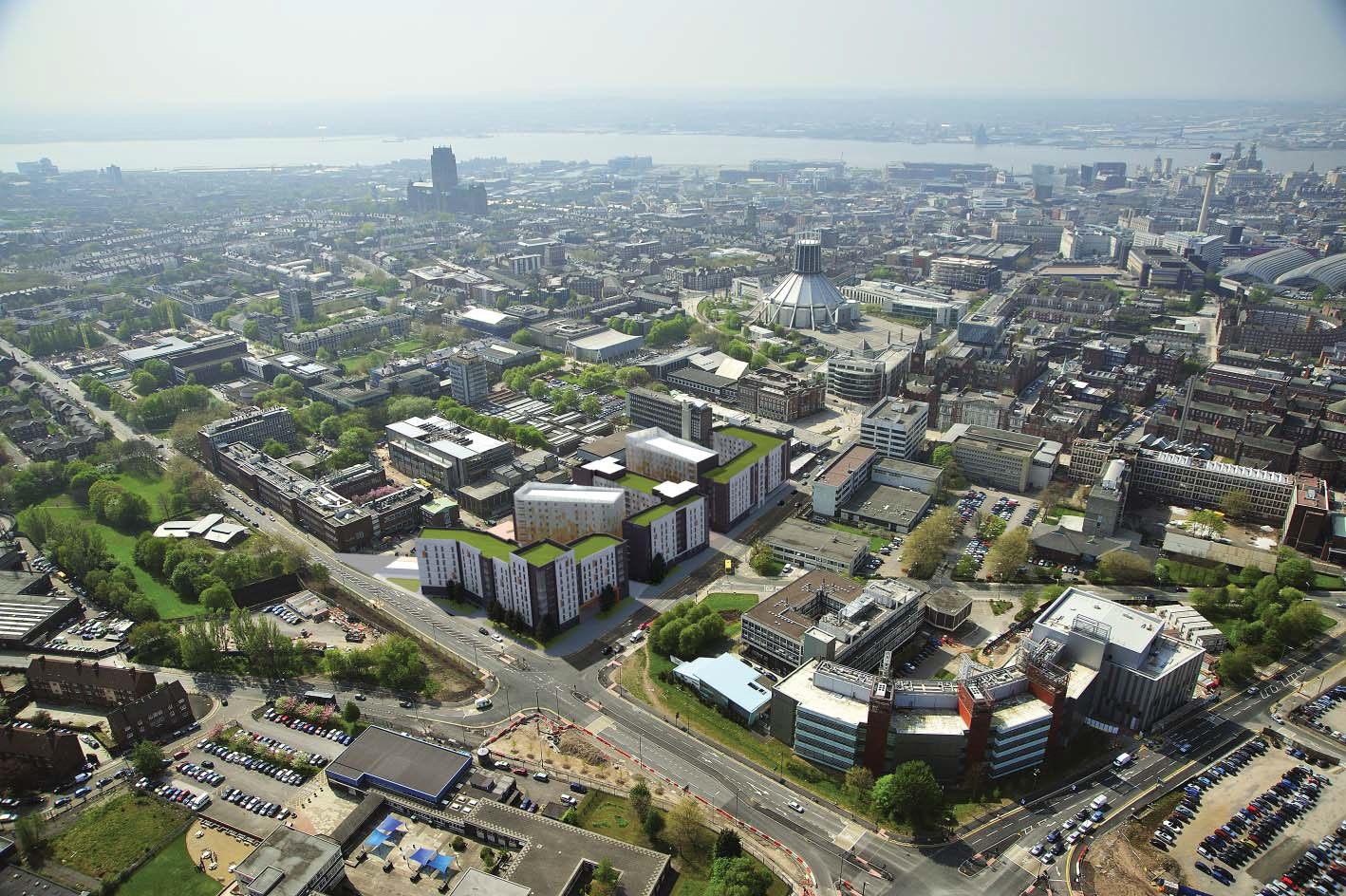
University of Liverpool. Working with OCON again, we won the development of 1259 student bedrooms on-campus in Liverpool. This was awarded Planning in August and has started on site recently. Aerial image of the proposed development below.

Liberty Living, Southampton. We are currently finalising a Planning permission for the conversion of a 12-story office block to student living and also the development of 150-beds in a new 16-storey tower on a site in Southampton.

University of West of Scotland. We have delivered two separate developments for this University on their Paisley and Ayr campus’. The Paisley scheme has recently been completed and we worked with Graham Construction.

The list above is a mere snapshot of our experience, but I hope it demonstrates our strength in this sector. Our exposure to more and more Universities is also seeing us develop strong working relations with Universities to design new faculty and academic buildings – a sector we are keen to build on.

So, Will the student living boom continue? I suspect it will for some time yet – certainly on-campus. But we are likely to see a slowdown I think. We’ll see what comes out of the conference tomorrow…

Architecture – creating the right environment.

Given our long-standing work in the retail sector, we have regular dialogue with clients about ‘customer/ user experience’ – and getting it right. For me, this term defines the creation of a complete environment which is perceived as positive (or negative) for the target audience; the customer/ user. In a retail context, this can include; products on sale, customer service, clear way finding, interior finishes, product displays, lighting and signage. On example might be the way a product is lit; this can have a direct impact on how it is seen and therefore whether a customer chooses to buy it.

My wife recently visited a well-known national retailer in our local Shopping Centre. This store, when first opened about 5 years ago, was modern, but perhaps a bit too stark by normal standards. It had a grey floor throughout and plain walls. It felt bland and it was easy to get lost in. Apparently the store has been refurbished at some point recently and the impact this had on my wife seemed significant. Clearly it wasn’t all about the interior fit out. The product line and service from staff was good too. But the environment did have a tangible impact on the customer. I haven’t seen the store myself, but I’m intrigued to go now – good indirect marketing in itself! Apparently the finishes and overall aesthetic are of a really good quality and it’s easy to navigate around the store. These may seem relatively simple things, but creating the right environment is so important and can transfer directly to sales and income for businesses. The environment, if done correctly, can also be a direct reflection of a Brand. Look at any Audi dealership – they have a theme and reflect key qualities of their products. Likewise Apple stores reflect their brand and products. A visit to any Apple store is always an experience and there is a theme which is consistent wherever you are in the world.

L&H’s work spans many different sectors which includes environments for; retail, workplaces, education, leisure/ entertainment and living. Through all of our work we put a lot of effort into ensuring that the architecture is right and the building has an identity which is aesthetically pleasing. But we also work hard to ensure that the user experience is considered throughout. I don’t think this is something that all architects consider. There seems to be a focus by others which is all about the most design-led ‘look’ with little or no priority given to a) how the building will be used/ experienced on a humanistic level, and b) how the building will wear over time. How often do we see crisp, white modernist boxes which look amazing when first built…but are then tired and worn in just a couple of years – is this creating the right environment? I think not.

I think there are many architects who are perhaps too focused on their own port-folio, creating buildings which can be perceived as showcase or ‘trophy’ architecture. Is this right? Will this architecture last? Who benefits long-term?

I believe Architecture is about creating buildings which are aesthetically pleasing, appropriate to their context AND, perhaps most importantly, creates the right environment for the users. Buildings are for people. In the world of ‘design and build’ led construction and endless ‘value engineering’ at every opportunity, the focus all too often is about finishing the job quickly, easily and for as a little money as possible. Managing these issues are perhaps our greatest challenges now as architects.

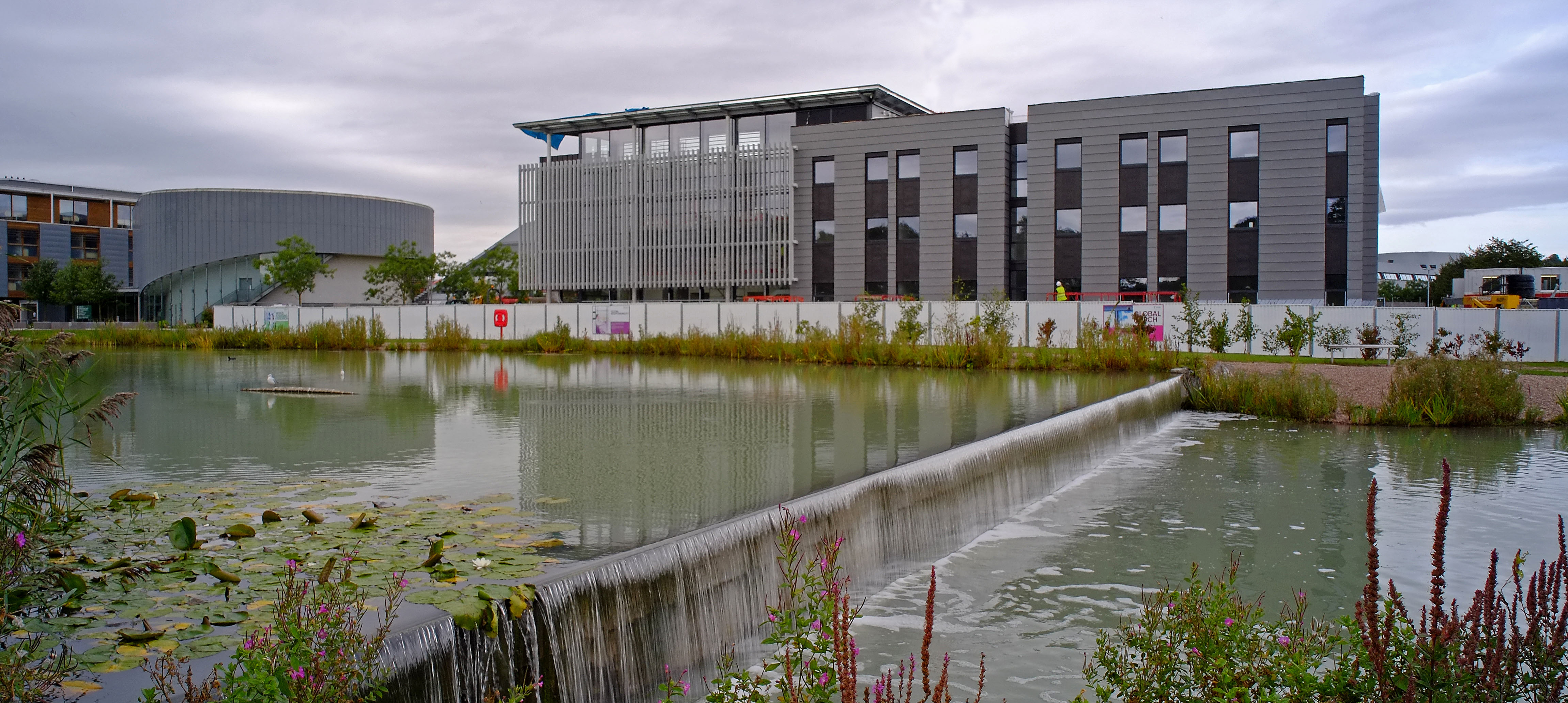
This years Stirling Prize winner, the Sainsbury Laboratory in Cambridge is, in my view, a fantastic building. It exudes design and construction quality in every image you see. Designed by Stanton Williams architects, these guys seem to be a practice who do not seek fame or trophies – but do so from simply creating outstanding architecture – the way it should be. However, it must be noted that this particular building cost £80m! In fact, a lot of high quality contemporary architecture seems to emerge on University campus’ – are these clever people a minority which still appreciate true quality in architecture and impact it can have on its users?

People seem complacent sometimes about architecture. Buildings are permanent. They have an impact on the built environment within which they exist for many decades. They need to be right. It seems that quality architecture is being continually eroded and devalued. More and more people, seemingly regardless of professional experience/ training, have an increasing influence over design and architecture – this is not right. The industry needs to appreciate the value of architecture more and the positive effects it can create, both in terms of human experience of buildings and also longevity of our built environment.

The outlook could be bleak for the Higher Education sector…

“UK higher education institutions together educate some 2.5 million students annually, including over 400,000 from outside the UK, making the higher education sector one of the most important export earners for the UK economy. The last 10 years has seen significant expansion, with a 28 per cent increase in student numbers from all domiciles.”

Source: UK Universities – Patterns and Trends in UK Higher Education 2011.

The UK Higher Education system is world leading. We now have 165 HE institutes offering a wide-range of academic choice for both national and international students. The success of the sector has resulted in major investment and development in Academic campus teaching/ learning facilities and also student accommodation – a sub-sector which emerged in its own right, and matured significantly over the last ten years. The HE sector is arguably the strongest it has ever been. However, we are now witnessing a major change in the sector – the impact of this could be negative and have long term implications.

Lewis and Hickey have seen a significant amount of work over the last 6-8 years in Student Living. We have delivered over 11,000 beds to date. We have also worked with a growing number of Universities on Academic facilities. The image below is our “Si Yuan Centre of Contemporary Chinese Studies” faculty building at the University of Nottingham. This is due for completion at the end of October.

In the last two weeks I have spoken to a number of different Universities and closely related University businesses. It is confirmed that undergraduate student intake numbers are down this year. This could be by as much as 14% (54,000) or more. The full extent of the shortfall is not known just yet, but it is definitely causing some concern. It is anticipated that this reduction could cost the HE sector £1.3b in the next three years.

This year sees the start of the £9000/ year fees and, despite warnings from UCAS, the Governments policy on AAB requirements (from ABB). Add to this the continuing global recession. The outcome is a shortfall in students starting University. The reasons for this are no doubt varied. Affordability is a major one, but the Russell Group Universities are also seeing their top courses under-subscribed for the first time due to the AAB introduction. Have we pushed the sector too far? Nick Clegg has recently made a somewhat unprecedented apology for the rise in fees from his parties perspective. This can be seen here (the non-musical version!). This apology (from the Lib Dem’s) underlines the significance of this issue.

There are wider implications as well. Privately owned Student Accommodation has continued to deliver strong yields for investors and lenders through the recession. However, demand and occupation is critical to financial models. Having as little as 5% empty rooms across a port-folio can have major implications. Owners/ operators are now assessing whether to reduce rentals and/ or invest in upgrading facilities – the former being most likely. This will directly affect asset values and of course investor returns, resulting in reduced confidence.

This could mean a rather bleak outlook. I believe that the HE sector and associated capital investment/ development could start to change/ reduce soon. The big question is; will this be a short-term blip (a year or two) or a long-term change for the sector? How the Government and HE sector respond to all this will be critical. No doubt the HE institutes will be unable to stand still, perhaps they will focus on further growth outside of the UK? This would obviously be negative for the UK economy.

The future of the High Street?

The High street is part of Britain’s heritage and culture (as well as many other places). It was the social and economic hub of most Cities and towns. Today the High street looks rather sad and lacking in vibrancy; a mix of poor to medium quality retailers, charity/ discount stores and a growing number of empty units.

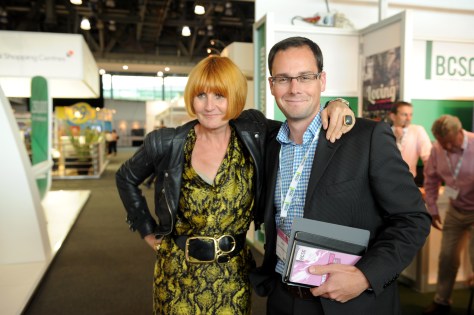
Why is this? Simple; “The biggest displacement of the high street has been the boom out-of-town retail development” said Mary Portas at this weeks BCSC Retail Property conference I attended in Liverpool. As High streets became choked with vehicles and demand from large retailers was for larger, more flexible retail units, the High street started its decline. National brand retailers focused on easy access, big FREE car parks and flexible retail spaces. The Planners response to the rapidly expanding Supermarket brands was “Yes, build out of town!“. Huge mistake. Add the growth of internet commerce (which actually still isn’t as big as people perceive) and in 2012 our High streets are dying fast. The High street decline perhaps doesn’t affect retail per-say – retail exists elsewhere now, but it does have a bigger social and economic impact.

Hyper-consumerism, alongside endless credit/ bank lending and busy lifestyles fueled demand for large one-stop shops – American style. The only thing the Supermarket didn’t provide (initially at least!) was to make these retail environments ‘destinations’, with a sense of identify and place; a social hub – a beating heart to communities.

Mary Portas has nailed the key problems under her commission by the Government. I think the Portas Review succinctly identifies the issues and provides 28 recommendations to try and deal with this serious problem – which goes way beyond retail. One thing Mary said this week is that “New Edge of Town retail development should stop now…Supermarkets should go back INTO towns”.

It’s not just the Supermarkets to blame here. Local Authorities and Planners have a large part to play in this too. But perhaps most of all the Government should take responsibility.

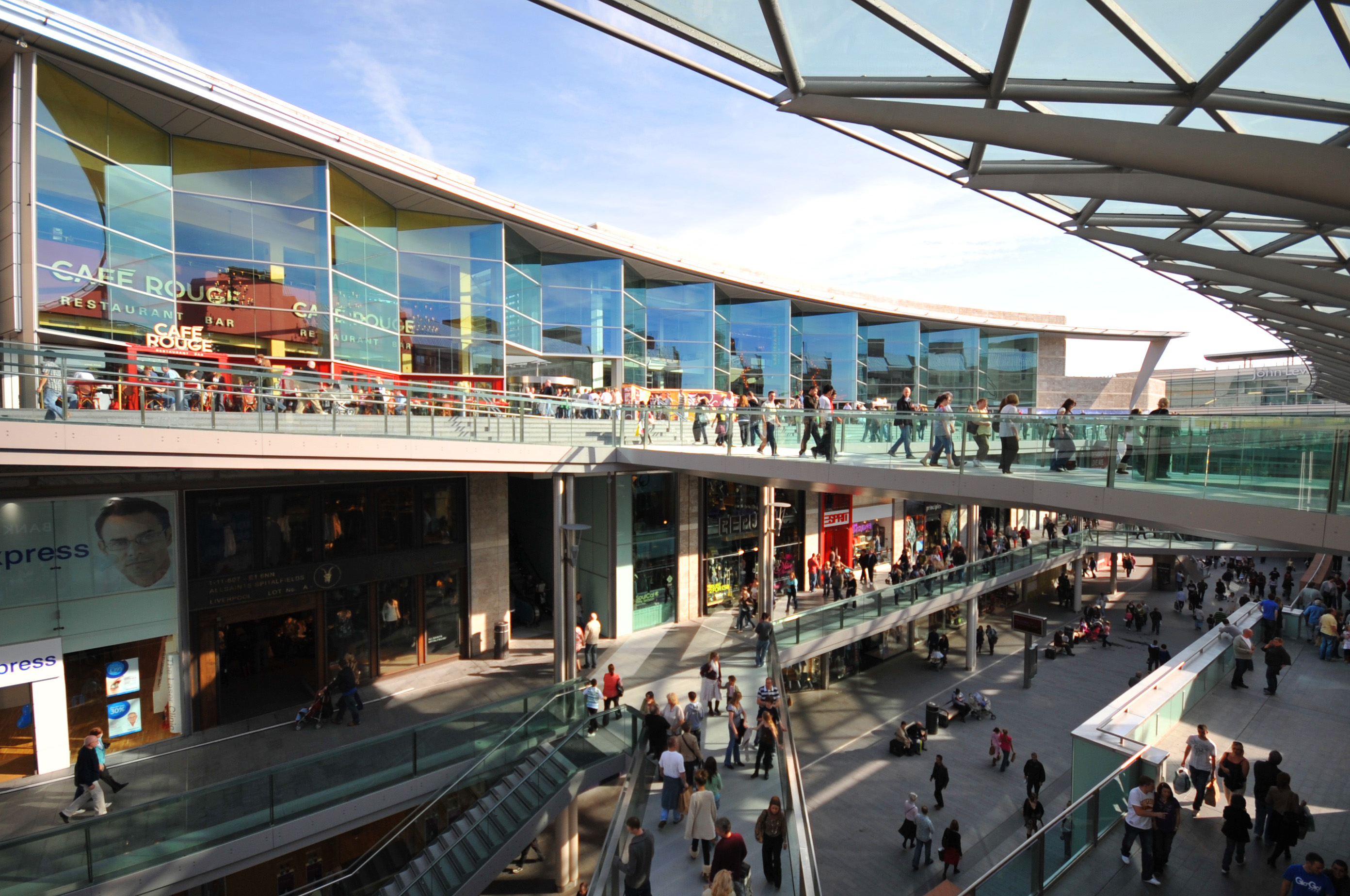
Some recent examples of mixed-use, city-centre retail development has shown very different outcomes. Derby’s retail centre has been completely shifted by Westfield. St. Peters street (the former ‘high street’ of the City) has died. Westfield do operate a  successful destination; the centre has every major retailer, special events, food and drink outlets and a cinema…to name just some. However, it also has doors on every boundary of the fully enclosed building. It works well in isolation, but doesn’t integrate into the City fabric. By contrast Liverpool ONE by Grosvenor offers a very different feel. It doesn’t have doors into the centre, or a roof. It connects into the existing street fabric well and enhances the existing retail offer. Perhaps this is more sustainable for the City as whole.

Back to the problem of our existing high streets and the towns/ cities which are struggling. What is the future of the High Street? The solution needs to attract people, re-create a destination with identity and a sense of place. It should include retail, but not exclusively. Real creativity is needed, new ideas. Portas talks about Children’s play centres, education and learning environments, cultural uses like galleries and museums as well as social eating and drinking venues. Many other things should be considered too. A stronger emphasis needs to be placed on the re-introduction of Independent retailers, not just the national brands. Also, what came from the conference, is that consumers seem to be demanded higher quality retail offerings.

In principle this all seems to make sense. However, notwithstanding the financial investment/ risks involved in new ideas, the mechanism for making this change is a massive challenge. Property prices are a problem, with no doubt some/ most in negative equity and/ or certainly worth a lot less than 5-10 years ago. People/ companies wont want to realise this ‘loss’ in value. Landlords are holding out for a return (?) or higher rents, at the cost of having units/ buildings sat empty. The tax and future cost implications of this will only rise.

The Government, having commissioned the Portas Review, need to act now and address the growing problem of the High Street. It will continue to have serious economic and social implications if we stand still. 

Houses for a sustainable future at BRE Innovation Park

My environmentally friendly car of the future is a BMW M3. What does my sustainable house look like? Well this might give you an idea…

Last week I visited the BRE (Building Research Establishment) head quarters in Watford. More specifically I had a tour around Innovation Park. This is a live test bed for the future of Sustainable Innovations. Its focused on domestic housing and there are eight houses there currently – all integrating, showcasing and actually testing the latest in design and technology to maximise sustainable living. The Government are backing this initiative and pushing for continually higher standards. Domestic houses have standards set/ bench-marked by the Code for Sustainable Homes. These are not currently mandatory for all homes. The HCA (Homes and Communities Agency) have set specific ‘sustainability’ targets to be achieved for all new Social/ Affordable housing in the future.

The industry recognised measurement body for sustainability is BREEAM (Building Research Establishment Environmental Assessment Method – you can see why they went for BREEAM!) I’ve always called it “BREE-AM”, but I was assured by the people at the BRE that it is actually said “BRE(EA)M” – like the Fish. Maybe there’s a tenuous association there to preserving natural habitats? Or maybe not.

I hadn’t appreciated that the BRE was first established in the 1920’s, although its focus in the early days was on improving housing quality generally, with less emphasis on Sustainability. I suspect they probably had little/ no understanding of the impact of buildings on the environment – and therefore the need for more sustainable homes back then. During the second world the BRE site in Watford was also used for confidential research and development of the bouncing bomb – used on the Möhne Dam in the famous Dambusters Raid in 1943. We saw the scaled ‘test’ model of the Dam which is still there today and is Listed by English Heritage.

The day at the BRE was hugely informative and insightful. Here’s some of my observations/ thoughts from it…

A lot of the houses there are very conceptual in their design; challenging the way we live now – as well as integrating sustainable design principles. This is commendable (and very good from an Architects ‘design’ perspective), but I cant help challenge it from a layperson point of view. It’s one thing people embracing sustainable living and energy use/ re-use, but to wrap this in an envelope/ floor plan format that is very different to ‘the british semi’ maybe a step too far? Surely this is adding obstacles to gaining wider public support? For me that’s the challenge here; to create houses which maxmise sustainable living, in a fabric and format which the majority of house buyers will want to buy/ live in. You can see links/ full details of all the houses being showcased by clicking here to open a PDF guide. However, three houses stood out for me, for different very reasons…

The Barratt Green House (click on title to see a pdf)
This is an ‘urban living’ home, designed to be built in terraces. It is designed to the highest achievable standard; CfSH Level 6. This is an interesting format and contemporary in its appearance. It has high levels of thermal mass through its concrete panelised construction. Externally is has triple glazed windows with external automated shutters, a sedum roof and rainwater harvesting. Internally it runs on a mechanical ventilation system, solar PV, solar thermal, and an air source heat pump – all managed via a computerised control system. This is all impressive stuff. Like most of these houses it requires a Plant Room (not the green growing things – M&E machinery!). This is something the homebuyers might also need to get used to in the future! The downside you ask?…it costs £1.2m to build at the moment! Not exactly deliverable to the masses.

The Renewable House (click on title to see a pdf)
This is probably the closest house to being ‘normal’ – as we know it. It is built with a timber frame and Hempcrete walls. Thermafleece roof insulation is made of British Sheep Wool to keep the house warm. Heating is provided via an under-floor heating system and solar thermal collectors provide hot water. This house concept was used by Kevin McLoud in his Haboakus housing development called ‘The Triangle’ in Swindon. A scheme which I didn’t really buy into when watching the Channel 4 documentary last year. However, this house is more conventional and therefore will possibly be accepted by the masses. It also costs £75k to build. This all seems quite good. However, it feels like any other ‘new house’ – is this good? Maybe there’s a balance to be had here.

The Prince’s House (click on title to see a pdf)
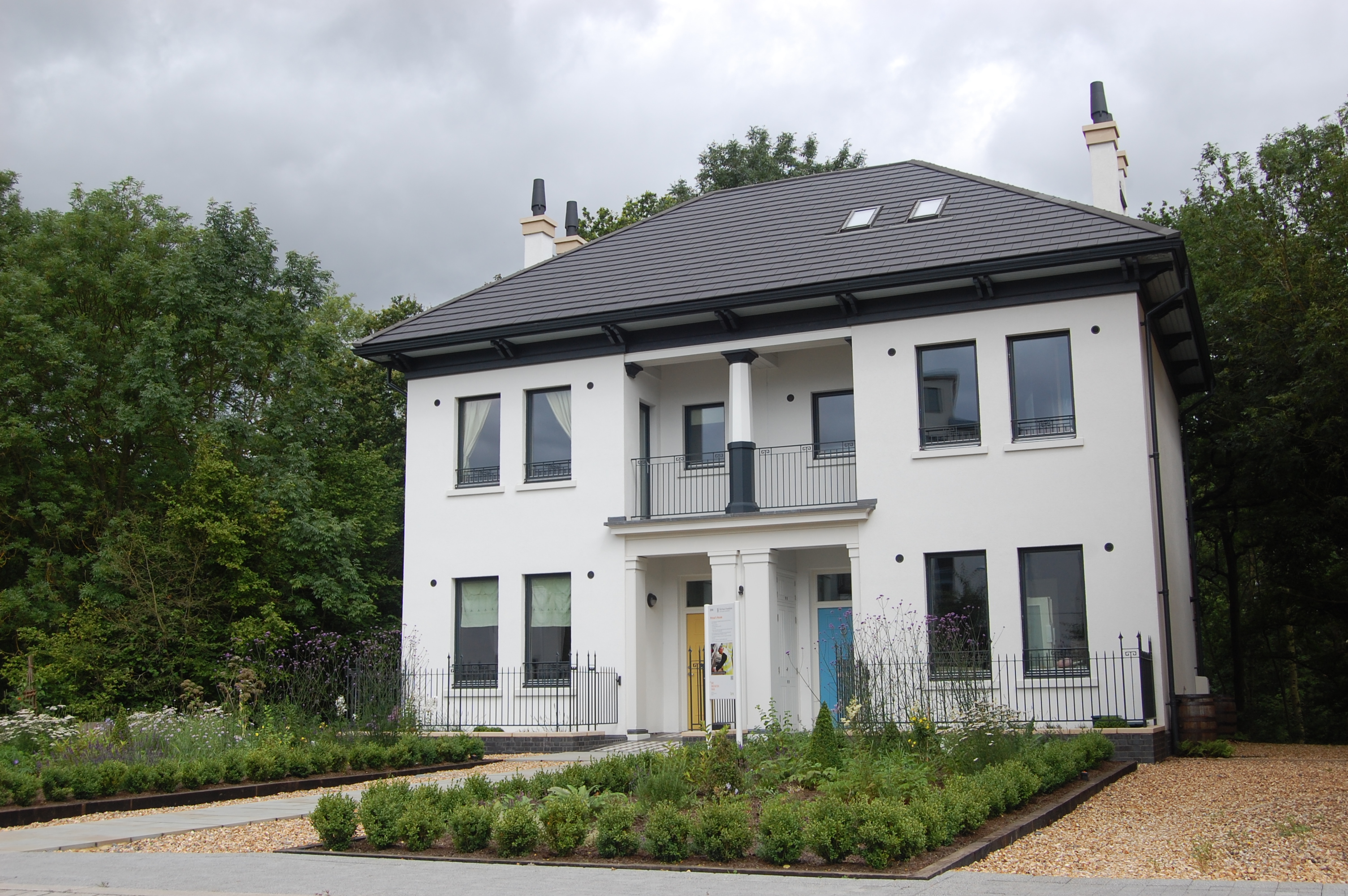
This house has been designed by the Prince’s Foundation. Describing the vision, HRH The Prince of Wales said; The Natural House doesn’t wear its “greenness” as if it was the latest piece of haute couture. . This is and interesting perspective. When I talk to people about their ‘ideal house’ more often than not they describe an old House, with well proportioned rooms and windows and solid walls, but wrapped in a modern, efficient and low-maintenance fabric. As an Architect people often say to me ‘would you like to design/ build your own house one day?’ – Actually my ideal house would be an old brick/ stone barn conversion, with complimentary contemporary additions – a blend of old/ new. Something spacious with real character, texture and detail. I digress a little here, but there’s a link. What has been achieved with the Prince’s house is a blend of efficient building technology with decent spaces internally. Its not uber modern or full of M&E ‘machines’, but actually really attractive – most of all internally. It uses natural materials, is highly insulated, uses wood fibre and sheep wool for insulation and a Passive ventilation system which modulates humidity and promotes a ‘healthy’ environment for occupants. Externally it could have a degree of flexibility in its aesthetic, but what they have designed has meaning.

“The Natural House’s basic appearance is that of “evolved tradition” – it used the simplest and most successful building solutions of the past and updates them to meet the needs of our low-energy future”.

The proportions of the house are based on a 6m x 6m square. This has a historic reference to early mass-housing design. These are the dimensions of each side of the house in elevation and also corresponds with the internal floor layouts. The front and rear rooms are each 6m x 6m. Internally it has high ceilings and big windows – the affect this has is wholly positive. I think this house has a lot of considered, informed and successful design thought in it. Figures to build this aren’t confirmed, but its believed to cost around £140k to build. Of all the houses we saw, I think this has perhaps has the most going for it.
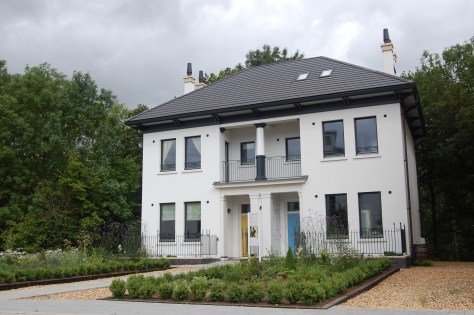
I’ve often felt frustrated by modern house design – and a sense that their proportions, details and ‘features’ look and feel wrong (to me). Maybe this is because a lot of modern homes aren’t actually designed by Architects? Add to that an immense pressure to make them cheap and quick to build and the output is, by and large, average at best. We should go back in time. Understand the thinking behind Georgian and Victorian homes in particular – a lot of which still exist.

So future housing design should obviously embrace sustainability, but also consider the past in terms of spacial and proportional qualities in housing design. Perhaps all this technology isn’t what its all about? Maybe we should keep it simple.

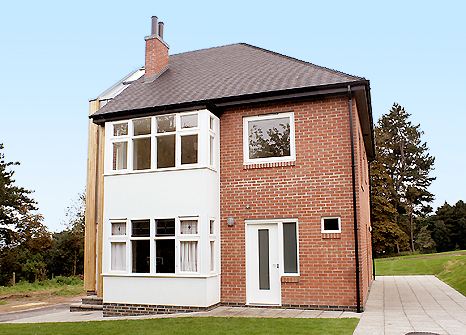
However, the real challenge now though is not really what all our new homes should be like (although long-term its important), but rather how we can adapt our current housing stock to improve energy efficiency and help the environment. There are currently around 25 million homes in the UK. New ‘eco’ housing stock will be, for some time yet, a very small proportion of this figure. How can we assess ‘the british semi’ and make it better? Well this is being looked at, although there was little evidence of this at the BRE. Actually the University of Nottingham have a similar Sustainable homes research programme on-campus. You can see details of it here. The image below is one of their houses. A 1930’s Semi-detached house – a format that makes up around 60% of the UK’s current housing stock. This is the problem in terms of the environment and this is what we need solutions for. Effective sustainable innovations which can be retro-fitted to current homes.
So, I think I’ve probably talked enough for now! This is a hugely important subject which needs continued research, testing and wider public awareness/ promotion. If you want to go the the BRE’s Innovation Park, go to their website. You can book a visit for just £30 per person and I think its very worthwhile.

One final thought; part of me expected/ hoped to see the car park at the BRE full of super efficient hybrid cars like Toyota Prius’ and super-mini electric cars…I was surprised. There were actually a lot of 4×4’s and the odd BMW M3 also! Maybe Jeremy Clarkson was right when Top Gear ‘proved‘ that a BMW M3 is more efficient and better for the environment than a Toyota Prius. Watch it here.

The future is sustainability.

Student Living Design Review Services

Lewis and Hickey have designed and delivered over 10,000 student bedrooms to date. This includes on and off campus projects for both private/ commercial and university clients. We believe this makes us proven sector leaders and we have a wealth of experience to draw on to demonstrate this. All of our UK offices have current/ recent student living so we can provide a local service.

One thing we are being increasingly asked to do is undertake due diligence reviews on existing projects at design stage. This can be for the following clients;

  • Property Agents
  • Universities
  • Developers
  • Acquisitions managers
  • Contractors

Our objective is to review projects from drawings quickly and thoroughly and provide concise and informative reports offering solutions to;

  • Maximise the density of proposals
  • Share experience in terms of the mix accommodation offering and ratios
  • Ensure compliance can be achieved with all regulatory standards (including HMO and British/ Scottish Building Regulations)
  • Maximise efficiency of both the design and construction
  • Consider and propose proven/ bespoke Fire Engineered solutions (potentially offering substantial savings/ efficiency)
  • Share experience with operational functionality in terms of design
  • Share experience on market evolution/ progression and trends in terms of design
  • Provide best practice solutions and evaluation of Bathroom Pod systems
  • Provide best practice solutions and evaluation of Furniture and Finishes

We are confident we can add value. That’s how we work. That’s how we retain so many clients…

If you are interested in talking to us about this, please contact;
Nick Riley via email on nick.riley@lewishickey.com

Or call any of our UK offices.

ARCHITECT. F1 FAN. FAMILY MAN.